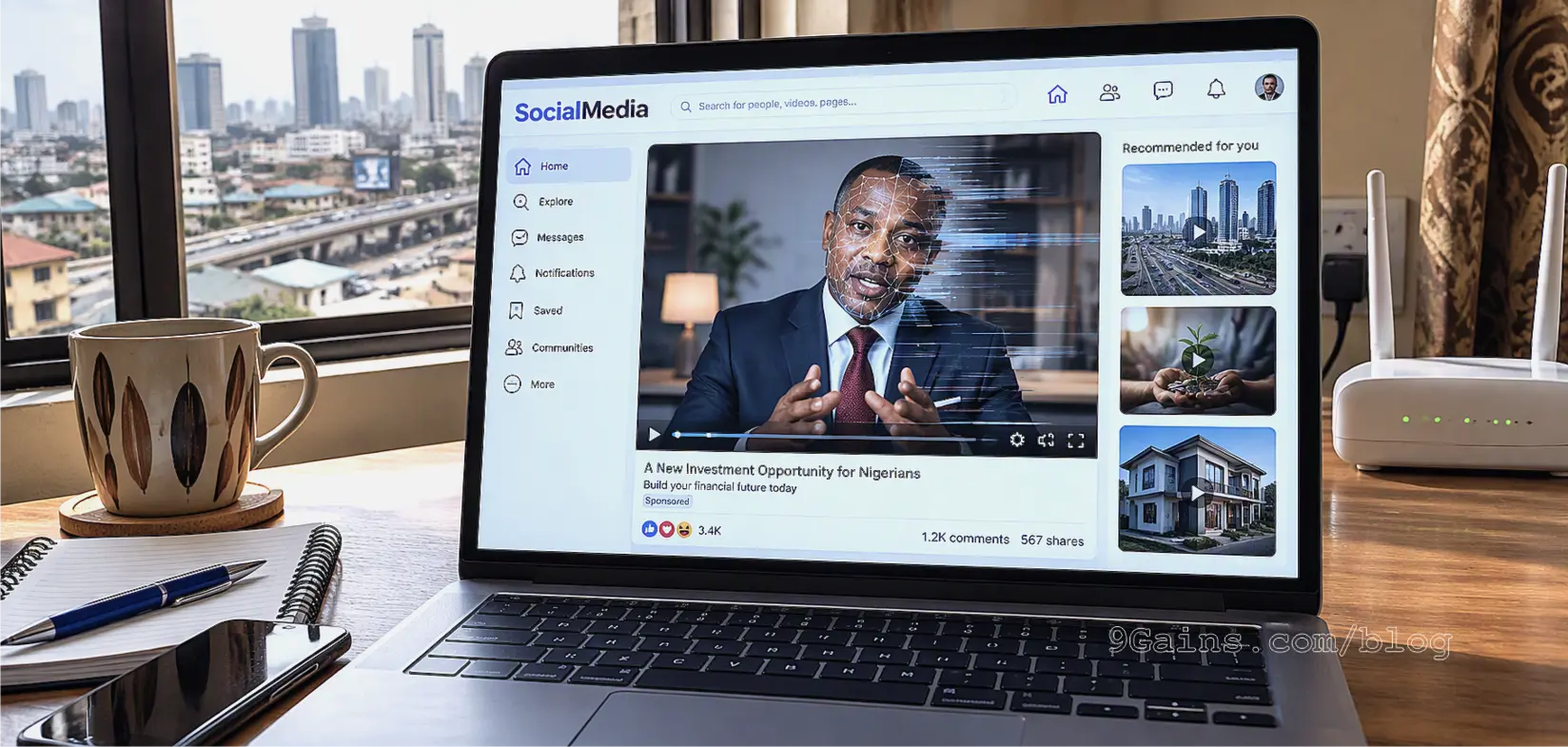
You may be watching a fake video on Facebook, Instagram or TikTok without knowing it. And that one video could cost you all your savings.
Imagine you see a video of a popular Nigerian telling people about a new investment, business opportunity or free money. The face looks real. The voice sounds real. Even the mouth moves as the person speaks. But did that person really make the video? This is one of the dangers of AI technology today. Some people are using technology to make fake videos that look and sound like real people. And many Nigerians may not know the difference.
The Face Is Real, But the Message May Be Fake
In October 2026, Premium Times reported how fake AI videos of popular Nigerians were being used to promote investment scams on Facebook. Some of these videos appeared as paid adverts, making them look even more believable.
This kind of fake video is called a deepfake. It means someone has used technology to copy or change a person’s face, voice or actions to make them appear to say or do something they never did. Imagine seeing a respected business leader telling you to invest ₦50,000 and earn ₦500,000. You trust the person, so you click the link. But the person in the video may know nothing about that offer.
Why This Matters to You and Your Business

This problem is not only about celebrities or politicians. It can affect business owners, workers, customers and families.
Someone could use a fake video or copied voice to pretend to be your boss, a business partner or someone you know. They may ask for money, account details or private business information. And because the video looks real, people may believe it without asking questions. Even a sponsored advert is not proof that an offer is genuine. Paying to promote a video does not make the message come true.
How to Protect Yourself from Fake AI Videos
Before you believe or share any video, follow these five simple steps:
- Check who posted it: Is the video from the person’s real social media account? Check if they shared the same message elsewhere.
- Don’t rush to make money: Be careful when a video promises quick money, big profits or free gifts. Scammers often use these offers to trick people.
- Don’t click strange links: If a video asks you to click a link or enter your bank details, stop and check first.
- Confirm before sending money: If your boss, friend or family member asks for money through a video or voice message, call them on a number you already know.
- Don’t trust everything you see: Some fake AI videos look and sound very real. Even if the face and voice look genuine, always check before believing or sharing.
Yes, AI can do many good things, but it can also be used to deceive people. Before you trust that next video, take a moment to check.
“Because seeing is no longer always believing.”